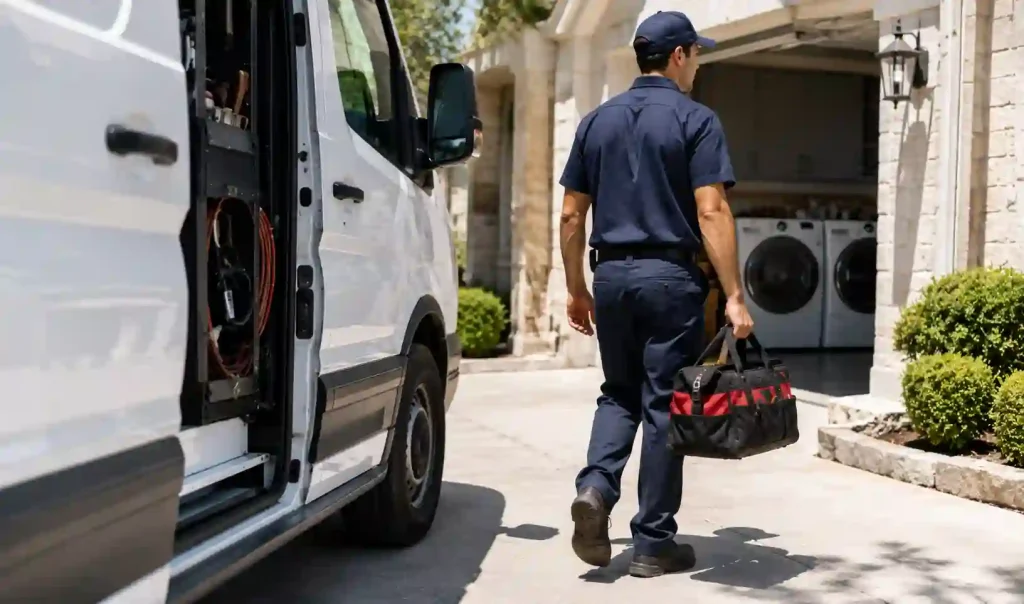
To protect your appliances during a power surge in Lakeway TX, install a whole-home surge protector at your main electrical panel, use point-of-use surge protectors on individual appliances, unplug sensitive electronics during severe storms, and have your home’s electrical system inspected regularly by a licensed electrician. These layered protections work together to stop voltage spikes from destroying the electronic components inside your refrigerator, washer, dryer, dishwasher, HVAC system, and other major home appliances.
Living in Lakeway means enjoying one of the most beautiful communities in Central Texas. The Hill Country views, the proximity to Lake Travis, and the relaxed pace of life along the 620 corridor make it an exceptional place to call home. But there is one reality that every Lakeway homeowner eventually confronts: the Texas power grid and the Central Texas weather system are not your appliances’ best friends.
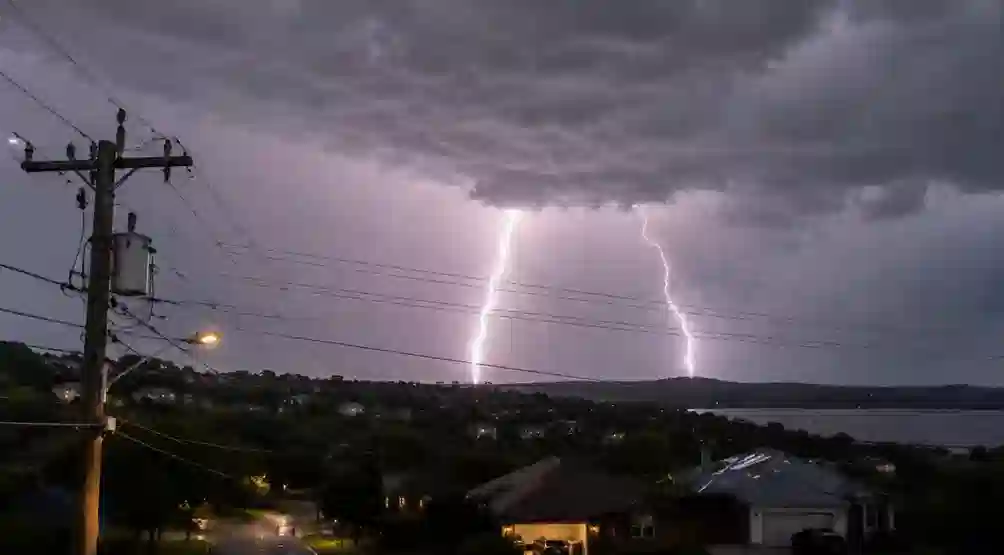
Severe thunderstorms roll in off the Edwards Plateau with little warning. Summer heat waves push the ERCOT grid to its operational limits. Utility companies restore power after outages in ways that send voltage spikes through residential wiring. Trees along the Lake Travis shoreline and throughout the Hill Country come down on power lines during high wind events. Any one of these scenarios can send a power surge through your home’s electrical system in a fraction of a second, and when that happens, the sensitive electronic control boards inside your refrigerator, washing machine, dishwasher, dryer, and oven absorb the consequences.
For Albany homeowners dealing with appliance issues after a power surge, professional appliance repair services can help restore your equipment quickly and safely.
The appliance repair calls that follow a significant storm event in Lakeway and the surrounding communities including Bee Cave, Steiner Ranch, Hudson Bend, West Lake Hills, and Jonestown follow a very predictable pattern. Refrigerators that will not power back on. Washing machines with unresponsive control panels. Dishwashers throwing error codes they never showed before. HVAC systems that ran perfectly before the storm and are now completely dead. In most of these cases, the damage was entirely preventable with the right surge protection strategy in place before the surge happened.
This guide explains exactly what power surges are, why Lakeway homeowners face a higher risk than many other markets, and what you need to do layer by layer to protect every major appliance in your home.
What a Power Surge Actually Is and Why It Destroys Appliances
A power surge is a sudden and brief increase in electrical voltage above the standard level that your home’s wiring is designed to carry. In the United States, residential electrical systems operate at 120 volts for standard outlets and 240 volts for large appliance circuits. A power surge pushes voltage above these levels, sometimes by a small margin and sometimes by thousands of volts in the case of a direct or nearby lightning strike.
The reason surges are so destructive to modern appliances comes down to how those appliances are built. Virtually every major home appliance manufactured in the last fifteen years contains a printed circuit board, a main control board, or a digital display that manages its functions electronically. These boards contain transistors, capacitors, and microprocessors that are designed to operate within very narrow voltage tolerances. When a surge pushes voltage above those tolerances, even briefly, it can burn through the circuit pathways on the board, destroy individual components, or cause the board to fail entirely.
The frustrating reality for homeowners is that a surge does not have to be dramatic to cause damage. A single large surge from a lightning strike is the obvious scenario, but repeated small surges from internal sources inside your own home accumulate damage to appliance circuit boards gradually over months and years. Every time your central air conditioner compressor starts up, every time the refrigerator compressor kicks on, every time a large motor appliance cycles, it creates a small internal voltage spike that travels through your home’s wiring. These minor events do not destroy appliances overnight, but they degrade the electronic components incrementally until one of them fails prematurely.
Why Lakeway TX Homeowners Face Elevated Surge Risk
Most general guides about power surge protection treat the topic as universally applicable regardless of location. The reality is that your geographic location, your utility infrastructure, and your local weather patterns all determine how frequently and severely your home’s electrical system is exposed to surge events. For Lakeway homeowners, several factors combine to create a higher risk profile than many other residential markets.
The Central Texas thunderstorm corridor. The region between San Antonio and Austin, including the Lakeway and Lake Travis area, sits in one of the most active lightning and severe thunderstorm zones in the continental United States. The Edwards Plateau creates conditions where storms intensify rapidly as they move east, and the open water of Lake Travis can act as an attraction point for electrical activity during peak storm season from March through October. Lightning does not have to strike your home directly to damage your appliances. A strike on a power line anywhere in your neighborhood can send a surge through the entire distribution network instantaneously.
ERCOT grid stress events. Texas operates its own independent electrical grid managed by the Electric Reliability Council of Texas, or ERCOT, which distributes power through local utilities including Oncor, which serves the Lakeway area. During extreme weather events, whether summer heat waves pushing demand to record levels or winter storms like the February 2021 event that left millions of Texans without power, the grid undergoes significant stress. When power is restored after an outage, the restoration process can introduce voltage fluctuations into residential distribution lines that manifest as surges inside your home. ERCOT itself has recommended that homeowners unplug major appliances before power is restored after an outage specifically to prevent this type of surge damage.
Oncor distribution infrastructure. The distribution lines that carry electricity from substations to Lakeway neighborhoods run through significant tree canopy, particularly along the lakefront areas and through the older residential sections of the community. High wind events, which are common during Central Texas storms, bring tree limbs down on distribution lines regularly. When a line is damaged and then restored, or when a tree limb causes a momentary fault on the line, the resulting electrical disturbance travels down the distribution network and enters homes as a voltage transient.
Rapid residential growth. Lakeway and the surrounding Lake Travis corridor have experienced some of the fastest residential growth rates in Travis County and Hays County over the last decade. New construction places increasing demand on existing distribution infrastructure, and in some neighborhoods, the electrical capacity serving established homes is being stretched to accommodate new development. Transformer overloading and grid capacity issues both contribute to voltage instability that manifests as minor surges in residential wiring.
The Two Types of Surge Protection Every Lakeway Home Needs
There is no single device that provides complete surge protection for a home. Effective protection requires two complementary layers working together, and understanding the difference between them is essential to making smart purchasing decisions.
Layer One: Whole-Home Surge Protection at the Main Panel
A whole-home surge protector, sometimes called a service entrance surge protector or a panel-mounted surge protector, is installed directly at your home’s main electrical panel by a licensed electrician. It is the first line of defense against surges that originate outside your home, including lightning-induced surges on utility lines, grid restoration events, and distribution line faults.
When a large external surge arrives at your home through the utility connection, the whole-home surge protector intercepts it at the panel level before it can travel through your home’s branch circuit wiring to reach your appliances. It does this using metal oxide varistors, or MOVs, which are components that absorb excess voltage and divert it safely to ground. A quality whole-home surge protector can clamp surges down to safe levels within nanoseconds, protecting every circuit in your home simultaneously.
The joule rating of a whole-home surge protector indicates how much surge energy it can absorb over its lifetime before the MOVs are exhausted and the device no longer provides protection. For a Lakeway home in the Central Texas storm corridor, look for a whole-home protector with a minimum joule rating of 1,000 joules and ideally 2,000 joules or higher. This provides meaningful reserve capacity for a market where severe weather surge events are not rare.
Installation requires a licensed electrician and typically takes one to two hours. The investment ranges from $250 to $500 including parts and labor depending on the unit selected and the complexity of your panel. Compare that cost to replacing a refrigerator control board for $400, an HVAC control board for $600, or a washer main control board for $350, and the value calculation becomes immediately obvious.
Layer Two: Point-of-Use Surge Protectors for Individual Appliances
A whole-home surge protector handles large external surges but provides limited protection against internal surges generated by your own appliances cycling on and off. Point-of-use surge protectors, which plug into individual outlets and provide surge protection at the appliance level, handle these smaller but cumulative internal surges and provide a second layer of defense against any surge energy that gets past the whole-home device.
Not all power strips are surge protectors. A standard power strip with no surge protection simply distributes power to multiple outlets without any voltage clamping capability. When purchasing point-of-use surge protectors for your appliances, look specifically for the joule rating on the packaging. A device with no joule rating listed provides no surge protection regardless of what the packaging implies.
For kitchen appliances including your refrigerator, dishwasher, and microwave, choose point-of-use surge protectors rated at a minimum of 1,000 joules. For laundry appliances including your washing machine and dryer, use surge-protected outlet adapters or appliance-specific surge protectors designed for 240-volt circuits if your dryer is electric. For home office electronics and entertainment equipment, which contain extremely sensitive circuit boards, surge protectors rated at 2,000 joules or higher are appropriate.
Replace point-of-use surge protectors every three to five years or after any significant surge event. The MOVs inside these devices have a finite capacity and degrade with each surge they absorb. A surge protector that has reached the end of its protective life may still power your appliances normally while providing absolutely no surge protection whatsoever. Some higher-end models include indicator lights that show when the MOV protection has been exhausted and the device needs replacement.
Which Appliances Are Most Vulnerable to Surge Damage in Lakeway Homes
Not all appliances carry equal risk when it comes to surge damage. The more sophisticated the electronic control system inside an appliance, the more vulnerable it is to voltage events. Based on the service patterns of appliance repair calls following storm events throughout Travis County, here is how the risk landscape looks for typical Lakeway homes.
Refrigerators and freezers are among the most surge-sensitive appliances in your home. Modern refrigerators from brands like LG, Samsung, Whirlpool, GE, Sub-Zero, and Bosch rely on main control boards that manage every function from compressor cycling to ice maker production to temperature display. A surge that kills the main control board can make the refrigerator completely non-functional. Replacement control boards for premium brands can cost $300 to $600 for the part alone before labor. Luxury brands like Sub-Zero, Viking, and Thermador, which are common in the custom homes along the Lake Travis waterfront, have proprietary control systems that are even more expensive to replace.
HVAC systems represent the highest single-cost surge damage scenario for most homeowners. Your central air conditioning system contains a control board that manages compressor operation, thermostat communication, and fan cycling. A surge that destroys this board can leave your home without cooling in the middle of a Lakeway summer, and replacement boards for major HVAC brands can run $400 to $800. The compressor itself is also vulnerable to surge damage, and a failed compressor is often a total loss requiring full system replacement.
Washing machines from brands including Samsung, LG, Whirlpool, Maytag, and Bosch are extensively computerized. The main control board manages every aspect of the wash cycle, and a surge-damaged board typically renders the machine completely inoperative with no error code or visible sign of what happened. Front load washer control boards commonly cost $200 to $400 for the part.
Dishwashers, particularly premium models from Bosch, Miele, KitchenAid, and Fisher and Paykel that are common in Lakeway’s higher-end homes, contain control boards that are just as surge-sensitive as those in washers and refrigerators. Bosch dishwasher control boards are among the more expensive to replace in the mid-range appliance category.
Ranges, ovens, and cooktops with digital controls and induction cooking surfaces are significantly more vulnerable to surge damage than older mechanical models. A surge that affects the electronic ignition system or the induction control board on a Viking or Thermador range is a very expensive repair.
Microwave ovens contain powerful magnetron tubes and control boards that are particularly susceptible to voltage spikes. A microwave that stops heating after a storm event has almost certainly suffered surge damage to the control board or the magnetron.
What to Do Before, During, and After a Power Surge Event
Having surge protection hardware in place is the foundation of appliance protection, but your behavior during storm events and power outages matters just as much.
Before a Storm or Predicted Outage
When severe weather is forecast for the Lakeway area and Lake Travis corridor, take these steps before the storm arrives. Confirm that all point-of-use surge protectors are properly connected and that their indicator lights show active protection status. If you have any surge protectors that are more than five years old or that have absorbed previous surge events, this is the moment to recognize they may not be protecting you anymore.
For your most valuable appliances, consider unplugging them from the wall entirely during a particularly severe storm event. No surge protector provides absolute protection against an extremely close lightning strike. Physically disconnecting an appliance from the electrical circuit is the only method that guarantees no surge energy can reach it.
Check your homeowner’s insurance policy before storm season arrives, not after damage has already occurred. Standard homeowner’s insurance policies vary significantly in how they handle surge damage claims. Some policies cover sudden and accidental appliance damage from power surges, while others exclude it entirely or require specific endorsements. Knowing your coverage in advance allows you to make informed decisions about protection investments.
During a Power Outage
If power goes out in your Lakeway neighborhood due to a storm or an ERCOT-related event, the period of the outage itself is when your appliances are in a temporarily safe state. But power restoration is a surge risk moment, not a safe one. When Oncor restores power after an outage, voltage on the distribution line can fluctuate for several seconds as circuits are re-energized. This restoration surge travels into every connected home simultaneously.
The most effective protection during an outage is simple. Unplug your refrigerator, washing machine, dishwasher, and any other major appliances from their outlets before power comes back on. Leave a single lamp plugged in so you know when power has been restored. Wait a full two to three minutes after the lights come back on before plugging appliances back in. This brief waiting period allows the distribution voltage to stabilize as the grid load normalizes after restoration.
After a Power Surge Event
If your home experienced a surge, do not immediately try to operate every appliance to see what survived. Unplug all major appliances first and inspect them visually for any signs of a burned smell, visible scorching near the outlet, or discoloration on the appliance’s power cord or plug. A burned or acrid smell from an appliance or an outlet after a surge event is a warning to not reconnect that circuit until a licensed electrician has inspected the wiring.
Check all point-of-use surge protectors. Many models have indicator lights that will show if the MOV protection has been exhausted by the event. A surge protector that absorbed a significant event needs to be replaced before it is trusted to protect appliances going forward.
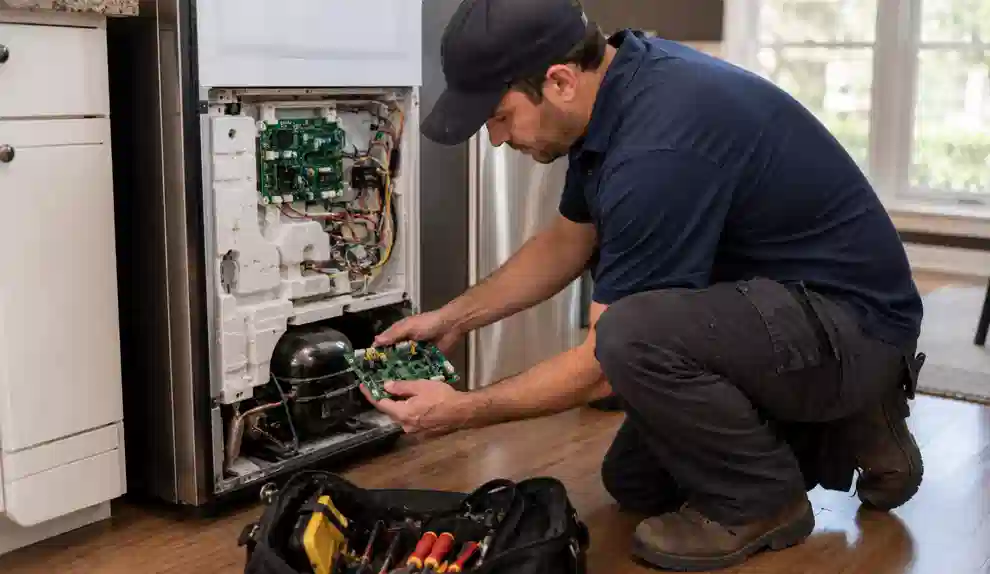
If you have appliances that will not power on or are displaying error codes they never showed before the event, contact a certified appliance repair technician for a diagnostic evaluation. In many cases, a surge-damaged control board can be identified and replaced without replacing the entire appliance.
Generator Safety: A Surge Risk Homeowners Often Overlook
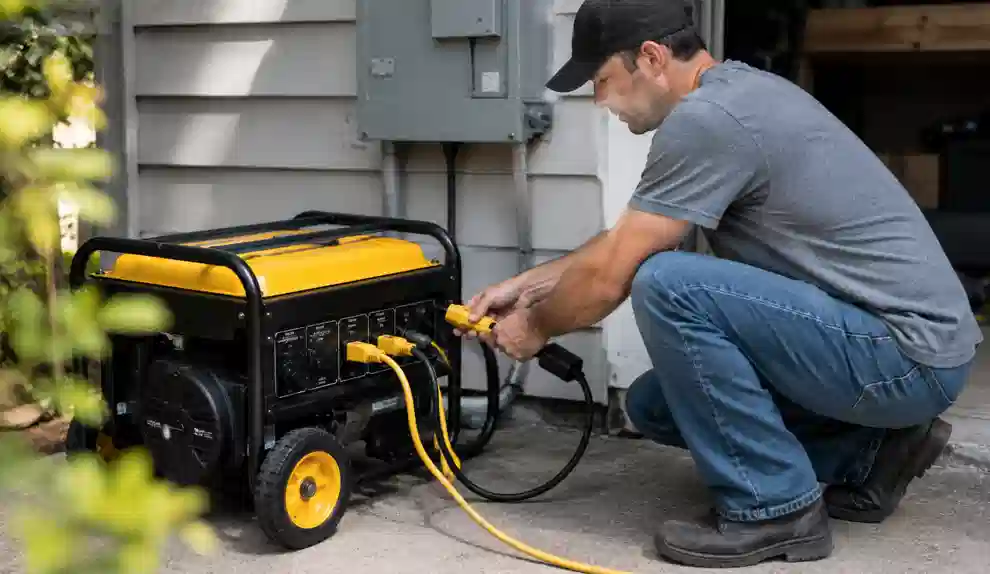
Portable generators became extremely common in Lakeway and across Travis County following the February 2021 winter storm, and they are a valuable backup power resource during extended outages. But connecting appliances to a generator without understanding the electrical risks introduces a surge scenario that many homeowners do not consider.
When a portable generator is not correctly sized for the connected load, when it is running under heavy demand and an appliance compressor starts up, or when the generator is switched off while appliances are still running, it can generate voltage fluctuations that damage appliance control boards just as effectively as an external grid surge.
Protect appliances connected to a generator by using point-of-use surge protectors between the generator outlet and the appliance. Never connect a generator to your home’s main panel without a properly installed transfer switch, which prevents generator power from back-feeding into the utility grid and creates a clean electrical handoff when switching between grid and generator power. A licensed electrician can install a transfer switch and ensure your generator connection is both safe and surge-protective.
The Role of Your Home’s Electrical System in Surge Vulnerability
Surge protection devices work best when your home’s underlying electrical system is sound. An older home with outdated wiring, failing outlets, or an overloaded electrical panel creates conditions where even minor voltage events cause disproportionate damage because the wiring itself cannot handle normal current flow reliably.
Lakeway has a mix of newer construction and older established neighborhoods where homes were built in the 1980s and 1990s. If your home is more than twenty years old and has not had an electrical inspection in that time, scheduling one with a licensed electrician before the next storm season is a genuinely worthwhile investment. An inspection will identify wiring issues, evaluate your panel capacity, and confirm that your grounding system is functioning correctly. Proper grounding is essential for surge protection devices to work as designed, since they divert excess voltage to ground. A compromised ground connection reduces the effectiveness of every surge protector in your home regardless of its quality.
What Happens to Your Appliances After Surge Damage: Repair vs. Replacement
When a power surge damages an appliance, the outcome depends entirely on which component was affected and how severely. In most surge damage scenarios that appliance repair technicians encounter throughout the Lakeway area, the damage is limited to the main control board or a specific electronic module rather than the mechanical components of the appliance. This is actually good news, because a control board replacement is almost always significantly less expensive than replacing the entire appliance.
A refrigerator whose compressor, evaporator fan, and condenser system are all functioning perfectly but whose main control board was destroyed by a surge is a very repairable appliance. The same logic applies to a washing machine with a surge-damaged control module or a dishwasher with a burned door control panel. The key is having a certified technician evaluate the damage accurately before assuming the appliance is a total loss.
Some appliances, particularly older units that were already approaching the end of their useful life, may not justify the repair cost after surge damage. A fifteen-year-old washer that needs a $350 control board replacement might be better replaced than repaired. A five-year-old Bosch dishwasher or LG refrigerator with an otherwise healthy appliance condition is almost always worth repairing.
If your home is in Lakeway and you experienced appliance damage following a storm or power restoration event, a qualified appliance repair Lakeway technician can diagnose the damage accurately and give you an honest assessment of whether repair or replacement makes more financial sense for your specific situation.
Checking Your Homeowner’s Insurance Coverage for Surge Damage
This is a step that too many Lakeway homeowners skip entirely until after damage has already occurred. Standard homeowner’s insurance policies in Texas vary significantly in how they handle power surge appliance damage claims. Some policies cover sudden and accidental damage including power surges under the personal property section. Others exclude electrical damage or require a specific endorsement to cover it.
Contact your insurance provider before storm season to ask directly whether power surge damage to appliances is covered under your current policy, what documentation you would need to file a claim, and whether adding a surge damage endorsement is available and cost-effective given the value of your appliances. Keep purchase receipts, model numbers, and serial numbers for all major appliances in a location outside the home, such as a cloud storage account, so that documentation is available even if a storm causes physical damage to your property.
Practical Surge Protection Shopping Guide for Lakeway Homeowners
When selecting surge protection products, these specifications matter most. For whole-home panel protectors, look for a joule rating of at least 1,000 joules with indicator lights for protection status and a warranty that covers connected equipment. Brands with strong industry reputations in whole-home protection include Square D, Siemens, Leviton, and Eaton, all of which offer products compatible with standard residential electrical panels.
For point-of-use surge protectors, prioritize units with clearly stated joule ratings on the packaging, a clamping voltage at or below 400 volts, an indicator light that shows active protection status, and a warranty that includes connected equipment coverage. For large appliances including refrigerators and washing machines, look for purpose-built appliance surge protectors rather than standard power strips, as they are designed for the higher current draw and intermittent motor loads that characterize major household appliances.
Avoid purchasing the least expensive power strips available at grocery stores or gas stations during storm preparation. These products frequently provide no actual surge protection despite their appearance and price point. Budget appropriately for protection that will actually perform when you need it.
Frequently Asked Questions
How do I know if my appliance was damaged by a power surge?
The most common signs are an appliance that will not power on after a storm or power restoration event, a burning or acrid smell near the appliance or its outlet, error codes appearing on the control panel that were not present before, and a blown fuse inside the appliance. Not all surge damage is immediately obvious. Some appliances will function partially, with certain features failing while others work normally, which is also consistent with a control board that was partially damaged by a surge.
Does my homeowner’s insurance cover power surge appliance damage in Texas?
It depends on your specific policy. Texas homeowner’s insurance policies are not standardized on this point, and coverage varies significantly between providers and policy types. Contact your insurance agent directly and ask specifically about power surge appliance damage coverage before a storm event occurs.
What is the difference between a surge protector and a UPS?
A surge protector absorbs excess voltage and protects against surges but does not provide power during an outage. An Uninterruptible Power Supply, or UPS, combines surge protection with a battery backup that keeps connected devices running during a brief outage. UPS units are most valuable for sensitive electronics like computers, smart home hubs, and network equipment where even a momentary power interruption causes problems. For most major appliances, a whole-home surge protector combined with point-of-use surge protectors is sufficient.
How much does a whole-home surge protector cost to install in Lakeway TX?
A professionally installed whole-home surge protector in the Lakeway area typically costs between $250 and $500 including the device and electrician labor. The exact cost depends on the unit selected and the accessibility of your electrical panel. This is a one-time investment that protects every circuit and appliance in your home.
Can a power surge damage a gas appliance?
Yes. Gas ranges, gas dryers, and gas water heaters with electronic ignition systems, digital displays, and electronic control boards are all vulnerable to surge damage even though they use gas as a fuel source. The electronic components that control ignition, temperature, and safety systems rely on standard household electrical power and are just as susceptible to voltage events as fully electric appliances.
The Bottom Line for Lakeway Homeowners
Power surges in Lakeway are not a rare possibility. They are a routine reality driven by Central Texas thunderstorm activity, ERCOT grid stress events, Oncor distribution line faults, and internal electrical loads from the large appliances that every modern home depends on. The appliances most at risk including your refrigerator, HVAC system, washing machine, dishwasher, and oven contain electronic control systems that can be destroyed in a fraction of a second by a voltage spike they were never designed to handle.
The protection strategy is straightforward: a whole-home surge protector at your main electrical panel combined with point-of-use surge protectors on individual appliances, reinforced by the habit of unplugging major appliances before power is restored after an outage. This layered approach costs a fraction of what a single appliance repair or replacement costs, and it protects every appliance in your home simultaneously.
If you are in Lakeway, Bee Cave, Steiner Ranch, Hudson Bend, West Lake Hills, or anywhere along the Lake Travis corridor and a storm or power restoration event has already damaged one of your appliances, contact a certified appliance repair Lakeway specialist for a same-day diagnostic. A trained technician can identify surge damage accurately, tell you whether a control board replacement will restore your appliance fully, and get your home running normally again as quickly as possible.