
Your washer smells like mildew because moisture, detergent residue, fabric softener buildup, and trapped debris inside the drum, door gasket, detergent drawer, and drain pump filter are creating the perfect dark and damp environment for mold and bacteria to grow. The fix involves a combination of deep cleaning the gasket, running a hot sanitizing cycle, clearing the drain filter, adjusting your detergent habits, and leaving the door open after every wash to let the interior breathe.
That musty, sour smell hitting you when you open the washer door is one of the most common laundry complaints homeowners deal with, and yet it is one of the most misunderstood. Most people assume something is mechanically wrong with the machine. A technician must be needed. Maybe the washer is just old. In reality, in the vast majority of cases, the problem has nothing to do with a broken part. It is a maintenance issue, and it is almost entirely fixable at home without spending a cent on a service call.
That said, there are situations where the mildew smell points to something deeper, like a clogged drain pump, a deteriorating door gasket, or a drain hose that is not installed correctly. Ignoring those will bring the smell right back no matter how many cleaning cycles you run. This guide covers every cause in the order you should address it, from the simplest fixes to the ones that require a professional appliance repair technician.
For homeowners in Lakeway, Bee Cave, Steiner Ranch, Hudson Bend, and the surrounding Lake Travis area, there is an added layer to this conversation. Lakeway sits in one of the more humid corridors of Central Texas, and the combination of summer heat and indoor humidity gives mold and mildew every advantage it needs to establish itself inside a washing machine. Understanding why this happens here specifically, and what to do about it, will save you from dealing with this problem repeatedly.

Why Washing Machines Develop Mildew Smells in the First Place
A washing machine is, by design, a warm and wet environment. Every cycle introduces water, detergent, body oils, dirt, lint, and fabric softener residue into a sealed space. When the cycle ends, moisture lingers inside the drum, the gasket folds, the detergent dispenser, and the pump filter. If that moisture cannot evaporate quickly because the door is closed, the room is humid, or airflow around the machine is restricted, it creates conditions that mold and mildew absolutely thrive in.
Mildew is a type of mold that specifically favors moist, dark, poorly ventilated surfaces. The interior of a front load washer drum after a cycle, with the door sealed shut, is essentially an ideal habitat for it. Even top load washers, which have better natural ventilation than front loaders, are susceptible when the lid is kept closed and detergent residue is allowed to accumulate inside the tub over time.
The smell itself comes from microbial volatile organic compounds, the gases released by mold and bacteria colonies as they feed on the organic material trapped inside the machine. That material includes everything from soap scum and fabric softener wax to skin cells and lint. The more of it that accumulates without regular cleaning, the stronger and more persistent the odor becomes.
The Number One Culprit: The Door Gasket on Front Load Washers
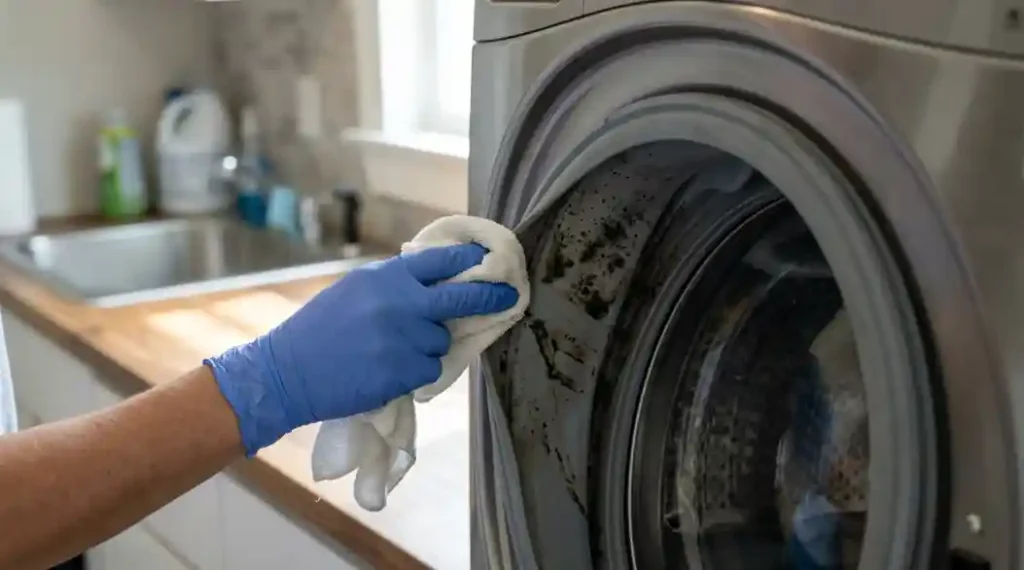
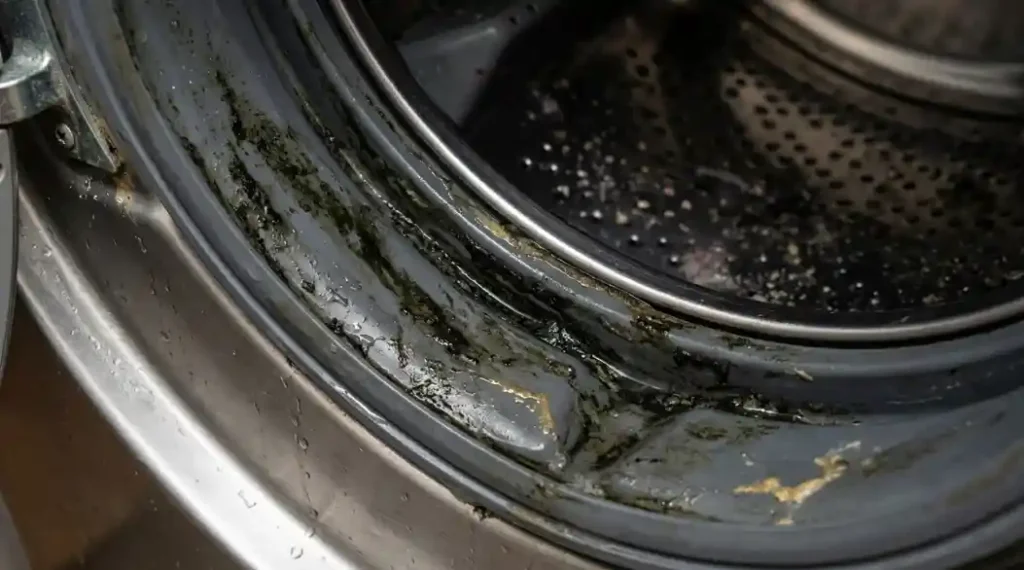
If you have a front load washer and it smells like mildew, the door gasket is almost certainly where the odor is coming from. This thick rubber seal runs around the entire perimeter of the door opening and creates the watertight barrier that keeps the drum sealed during operation. Its design includes deep folds and ridges that are extremely effective at trapping moisture, lint, hair, forgotten tissues from pockets, detergent residue, and standing water after every single cycle.
The interior folds of the gasket stay dark and damp for hours after a cycle ends. In a Lakeway laundry room during summer, where ambient humidity can be significant, those folds may never fully dry out between consecutive wash days. Over weeks and months, a thriving mold colony establishes itself inside those folds and produces the sour, musty smell that permeates the drum and transfers to your supposedly clean laundry.
How to clean the door gasket thoroughly:
Pull back every fold of the gasket with your fingers and look inside. You will very likely find a combination of black or dark gray mold spots, accumulated lint, hair, and a layer of soapy residue. Mix equal parts warm water and white vinegar in a spray bottle. Spray generously inside all the folds, let it sit for ten to fifteen minutes, and then scrub with a microfiber cloth or an old toothbrush. For visible black mold spots that do not respond to vinegar, a small amount of diluted chlorine bleach applied with a toothbrush will kill the colony at the surface. Rinse thoroughly with a damp cloth and dry the gasket completely with a clean towel.
Make this a weekly habit rather than a monthly one if your washer is in a humid laundry space or if multiple people in the household use the machine heavily throughout the week.
The Deep Clean Your Washer Actually Needs
Cleaning the gasket alone will not eliminate a persistent mildew smell if the interior drum, the inner tub walls, and the pump components are also contaminated. A thorough machine cleaning cycle is the next step, and it needs to be done correctly to be effective.
For front load washers:
Make sure the machine is completely empty. Set it to the hottest available water temperature and the longest available cycle. Add a dedicated washing machine cleaning tablet directly into the drum rather than the detergent drawer. Brands like Affresh produce tablets specifically formulated to penetrate and dissolve the biofilm layer that mold and bacteria form on the inner tub surfaces, drum baffles, and drum bearing seal. If you do not have a cleaning tablet on hand, you can add half a cup of baking soda directly into the drum and run the cycle without detergent. After the cycle completes, wipe the drum walls, the door glass, and the gasket dry with a clean towel before closing the door.
For top load washers:
Fill the tub with the hottest water setting and pause the cycle once the tub is full. Add two cups of white vinegar directly into the water and let the machine agitate briefly to distribute it. Pause the cycle again and let the solution soak for at least one hour before resuming and completing the full cycle. After the cycle finishes, wipe down the agitator, the drum walls, and the lid seal with a cloth dampened in a vinegar and water solution. Leave the lid open completely to air dry.
A note of caution that is worth emphasizing: never mix chlorine bleach and white vinegar together in the same cycle or even in close sequence. Combining these two chemicals produces chlorine gas, which is genuinely harmful. Choose one or the other for each cleaning session and rinse thoroughly between uses if switching products on separate occasions.
Related: Washing Machine Not Draining? The 6 Most Common Causes and Fixes
The Forgotten Component: The Drain Pump Filter
This is the single most overlooked cause of persistent washing machine odor, and it is the one that most generic guides either skip entirely or mention as an afterthought. Most front load washers manufactured in the last fifteen years have a drain pump filter located behind a small access panel near the bottom front of the machine. Its job is to catch lint, coins, buttons, hair ties, and other debris before they reach the pump impeller and cause mechanical damage.
When this filter is not cleaned regularly, it accumulates months or years worth of trapped debris soaking in residual water. That combination of organic material and standing moisture is one of the most potent sources of mildew odor inside a washing machine. It also restricts drainage, which means the machine does not empty completely at the end of cycles, leaving a small amount of standing water inside the pump housing that further fuels bacterial growth.
How to clean the drain pump filter:
Place a shallow pan or several towels directly under the access panel at the bottom front of your washer before opening it. When you unscrew the filter cap, water will drain out, sometimes quite a lot of it. Remove the filter completely, rinse it under warm running water, and use a brush to scrub away all accumulated debris and residue. Look inside the filter housing with a flashlight and wipe out any slime or buildup from the interior cavity. Reinstall the filter, tighten the cap securely, and run a short rinse cycle to confirm everything is draining properly.
This should be done every one to three months depending on how frequently you use the machine. If you have never cleaned yours and your washer is more than two years old, there is a very strong chance the filter is significantly clogged and contributing directly to the odor problem.
How Your Detergent Habits Are Making the Problem Worse
This is something most homeowners are genuinely surprised to learn. Using too much detergent is one of the leading contributors to washing machine odor, and it is an extremely common habit. The logic seems sound: more detergent equals cleaner clothes. In practice, the opposite is true when you exceed the recommended amount.
Excess detergent does not fully dissolve and rinse away during a standard wash cycle. It leaves behind a sudsy residue that coats the inner drum surfaces, the gasket, the detergent dispenser, and the pump components. That residue is an ideal food source for the mold and bacteria responsible for mildew odor. Modern high-efficiency washing machines, including front load washers from LG, Samsung, Whirlpool, Maytag, Bosch, and GE, are engineered to work with very small amounts of concentrated HE detergent. Using standard detergent in an HE machine, or using HE detergent in quantities larger than recommended, generates excessive suds and leaves behind substantially more residue than the machine’s rinse cycle can clear.
Practical corrections to make immediately:
Switch exclusively to HE formulated detergent if your machine has an HE designation, which most front load washers and many modern top load washers do. Reduce the amount you use to the minimum recommended quantity for your load size, which is typically far less than the fill lines on the detergent cup suggest. Stop using liquid fabric softener entirely if your mildew problem is persistent. Liquid fabric softener deposits a waxy coating inside the drum and on fabric fibers that traps bacteria and odor compounds. Wool dryer balls or dryer sheets are effective alternatives that leave no residue inside the washing machine.
The Detergent Drawer: A Hidden Mold Colony
The detergent dispenser drawer is one of the most overlooked components when homeowners try to address washer odor, and it is frequently one of the most contaminated. Every cycle deposits a small amount of detergent, fabric softener, and bleach residue inside the dispenser compartments. Over time this residue accumulates into a thick, waxy buildup that moisture makes perpetually damp and mold makes progressively more pungent.
On most washers, the dispenser drawer pulls out completely with a press of a release tab. Remove it fully and take it to a sink. Soak it in warm water for fifteen minutes, then scrub every compartment including the softener cup, the prewash section, and the main detergent chamber with a stiff brush or old toothbrush. Use a pipe cleaner or cotton swab to clear the residue from the dispenser tubes inside the machine cavity where the drawer slides in. Dry the drawer completely before reinstalling it.
Do this at minimum once a month. If your machine is used heavily or if multiple family members do laundry throughout the week, every two weeks is a more appropriate interval.
The Role of Your Drain Hose in Washer Odors
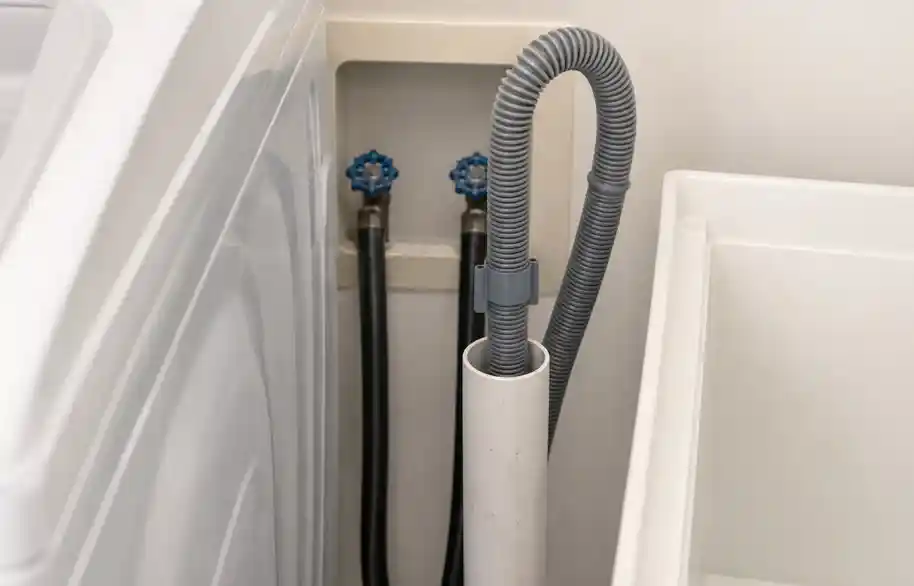
A less commonly discussed but genuinely important cause of persistent mildew smell is an incorrectly installed or partially clogged drain hose. The drain hose carries water from the pump out of the machine and into either a standpipe or a laundry sink. If the hose is not installed at the correct height, water from the drain standpipe can siphon back into the machine between cycles. That returning water brings bacteria and organic matter from the drain system directly back into the washer pump housing, creating a continuous source of odor regardless of how thoroughly you clean the drum.
The drain hose should be inserted into the standpipe at a height of between 30 and 48 inches from the floor according to most manufacturer specifications. It should not be pushed too far into the standpipe opening, as this creates a sealed connection that enables siphoning. If you have a persistent odor problem that is not resolving despite thorough cleaning of the drum, gasket, filter, and dispenser, have a technician check the drain hose installation. This is a quick adjustment that costs far less than ongoing cleaning products and repeated service frustration.
Brand-Specific Mildew Issues in Lakeway Area Washers
After reviewing service patterns across Travis County and the communities surrounding Lake Travis, some brand-specific tendencies are worth knowing.
LG front load washers have a well-documented history of mildew odor complaints, particularly on models manufactured between 2012 and 2020. The door gasket on many LG front loaders has a design that creates deeper moisture pockets than competing brands, making it more susceptible to mold accumulation. LG has addressed this on newer models with revised gasket designs and improved tub ventilation, but older units require more frequent gasket cleaning than other brands.
Samsung front load washers share similar gasket characteristics and also commonly experience odor problems related to the self-clean cycle not running at a sufficiently high temperature to fully eliminate bacterial colonies. Samsung recommends running the tub clean cycle monthly, but in the Lakeway area’s humidity, every two to three weeks is a more realistic maintenance interval for heavy users.
Whirlpool and Maytag washers with the FreshFlow vent system are specifically designed to address mildew odor by keeping air circulating inside the drum between cycles. These models are genuinely less prone to odor issues than sealed-door competitors, but the drain pump filter and detergent dispenser still require regular attention.
Bosch front load washers, which appear frequently in the higher-end homes throughout West Lake Hills and Steiner Ranch, have very tight door seals that prioritize quiet operation but trap moisture effectively after cycles. Bosch units benefit significantly from the habit of leaving the door propped open between washes and wiping the gasket dry after the final cycle of the day.
Speed Queen washers, popular with homeowners who prioritize durability and repairability, are generally less prone to mildew issues in top load configurations due to their more open drum design, but front load Speed Queen models require the same gasket and filter maintenance as any other brand.
Why Lakeway’s Climate Makes Washer Mildew Worse Than in Other Markets
This is an important point that deserves direct attention rather than being buried in a general guide. Lakeway, TX sits in a region where summer humidity regularly combines with high ambient temperatures to create conditions that are significantly more favorable to mold growth than many other parts of the country.
Interior laundry rooms in Lakeway homes that share walls with garages, or that have limited ventilation, can accumulate significant humidity during the summer months even with air conditioning running. A washing machine in that environment has even less opportunity to dry out between cycles than it would in a dry climate. The result is that mold colonies inside the gasket, drum, and pump filter can establish and grow faster, and cleaning intervals that would be adequate in a drier market are simply not sufficient here.
The practical adaptations for Lakeway homeowners are straightforward. Run a cleaning cycle every two weeks rather than monthly during summer. Never close the washer door immediately after removing laundry. If your laundry room lacks adequate ventilation, a small dehumidifier running during and after wash cycles makes a meaningful difference. And if your home’s HVAC system does not extend into the laundry area, consider adding a ventilation fan to that space. These are not dramatic changes, but they address the specific environmental reality of doing laundry in Central Texas.
When the Mildew Smell Signals a Repair Issue
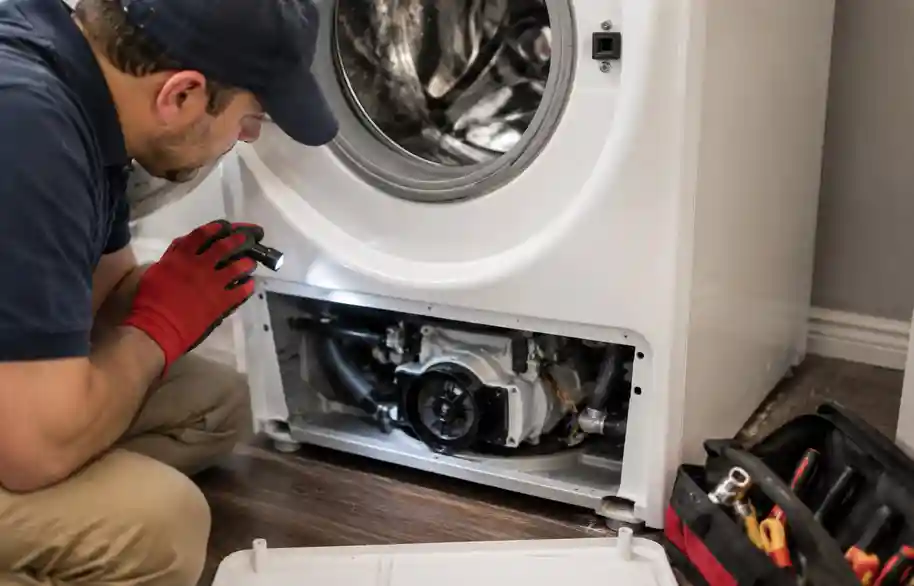
Most of the time a washer that smells like mildew is a cleaning and maintenance problem, not a mechanical one. But there are situations where the smell persists despite thorough cleaning and points to something that requires professional attention.
A door gasket that has deteriorated beyond cleaning, with visible tearing, deep cracking, or sections that have pulled away from the drum opening, needs physical replacement. No amount of cleaning will solve a gasket that is structurally compromised. A technician can replace the gasket on most front load washers in a single visit using an OEM replacement part specific to your machine’s model number.
A drain pump that is partially clogged or beginning to fail will leave residual water inside the pump housing after every cycle regardless of how clean the drum is. If you consistently find a small amount of standing water at the bottom of the drum after cycles end, or if the machine takes noticeably longer to drain than it used to, the drain pump warrants professional inspection.
A drain hose that is kinked, partially blocked by accumulated lint and mineral deposits, or incorrectly installed as described above requires either cleaning or reinstallation to resolve ongoing odor that originates from drain siphoning.
If your washer is in Lakeway and the mildew smell has persisted through multiple rounds of cleaning, a certified appliance repair Lakeway technician can diagnose whether the problem is a maintenance issue you have not fully addressed or a component that needs service. Same-day appointments are typically available from local repair companies serving the Travis County and Lake Travis areas.
A Practical Maintenance Schedule to Prevent Mildew Forever
Preventing the smell from coming back is ultimately simpler than eliminating it once it is established. These habits, maintained consistently, will keep your washer smelling fresh through every season in Lakeway.
After every single wash cycle: Remove laundry immediately when the cycle ends. Leave the door or lid open for at least two hours before closing. Wipe the door gasket dry with a towel on front load washers.
Weekly: Wipe down the entire gasket interior including all folds with a damp microfiber cloth. Check the detergent drawer for visible residue buildup.
Every two weeks during summer: Run a full hot water cleaning cycle with a washing machine cleaning tablet or baking soda on an empty drum.
Monthly: Remove and thoroughly clean the drain pump filter. Remove and soak the detergent drawer. Inspect the door gasket for any signs of physical deterioration.
Every six months: Check the drain hose installation height and confirm it is not siphoning. Inspect the drum baffles and inner tub for mineral or detergent scale buildup. If you have hard water and no whole-home softener, run a cleaning cycle with citric acid powder to dissolve mineral deposits from internal components.
Frequently Asked Questions
Why does my front load washer smell worse than my old top loader?
Front load washers use significantly less water than top loaders and have a tighter door seal designed to prevent leaks during horizontal drum rotation. That seal traps moisture inside the drum very effectively, and the reduced water volume means less flushing of detergent residue during each cycle. Both factors make front loaders more prone to mildew odor than top load machines without regular maintenance.
Will running more wash cycles help get rid of the smell?
Running standard laundry cycles will not eliminate an established mildew problem and may actually make it worse by adding more moisture and detergent residue. You need a dedicated cleaning cycle with hot water and a washing machine cleaner, combined with manual cleaning of the gasket, dispenser, and filter.
Can I use bleach to clean my washer?
Chlorine bleach is effective at killing mold and bacteria inside a washing machine drum. Use one cup of liquid bleach added directly to the drum on a hot cycle with no laundry inside. Never combine bleach with vinegar or any other acid-based cleaner. Always check your owner’s manual, as some gasket materials on certain front load washer models are not recommended for bleach exposure.
How much does washer repair cost in Lakeway TX if the gasket needs replacing?
A door gasket replacement on a front load washer in the Lakeway area typically costs between $150 and $300 including parts and labor, depending on the brand and model. Drain pump repairs or replacements generally run $150 to $350. A diagnostic service call is typically $75 to $100 and is usually credited toward the repair cost.
How long does it take to get rid of the mildew smell completely?
After a thorough cleaning of the gasket, drum, dispenser, and filter combined with a hot cleaning cycle, most homeowners notice a significant improvement immediately. Eliminating the smell completely and preventing it from returning requires consistent maintenance habits over the following weeks. If the smell returns within a few days of cleaning, a component issue like a failing pump or compromised gasket is likely involved.
The Bottom Line
A washer that smells like mildew is telling you something specific: moisture is sitting somewhere inside the machine without a way to escape, and organic material is feeding a mold colony that has had enough time to become established. The solution is systematic. Clean the gasket, clear the drain filter, deep clean the drum, fix your detergent habits, address the dispenser drawer, and start leaving the door open after every cycle.
For Lakeway homeowners dealing with the added challenge of Central Texas humidity, consistency matters more than it would in a drier climate. The same cleaning routine that works every four to six weeks in other parts of the country may need to happen every two weeks here during summer. That is not a flaw in your machine. It is simply the reality of operating appliances in this particular climate.
If you have cleaned everything thoroughly and the smell persists, or if you notice the gasket is torn, the machine is not draining completely, or the odor is coming back within days, contact a certified appliance repair Lakeway technician. A local expert familiar with the hard water conditions and climate demands of the Travis County area can diagnose and resolve the underlying issue in a single visit and get your laundry smelling the way it should.