

This guide breaks down each cause in plain language, explains what is actually happening inside your machine, and tells you exactly what you can do about it, whether that means a quick DIY fix or a call to a professional appliance repair technician.
How Your Washing Machine Actually Drains (Quick Overview)
Before jumping into the causes, it helps to understand the basic drainage process. After the wash and rinse cycles finish, your washer activates a drain pump. That pump pushes water out of the drum, through the drain hose, and into your home’s standpipe or utility sink. Several components have to work together for this to happen correctly, including the pump, the filter, the hose, and in top-load machines, the lid switch. When any one of these parts fails or gets blocked, the water has nowhere to go.
Cause 1: Clogged or Kinked Drain Hose
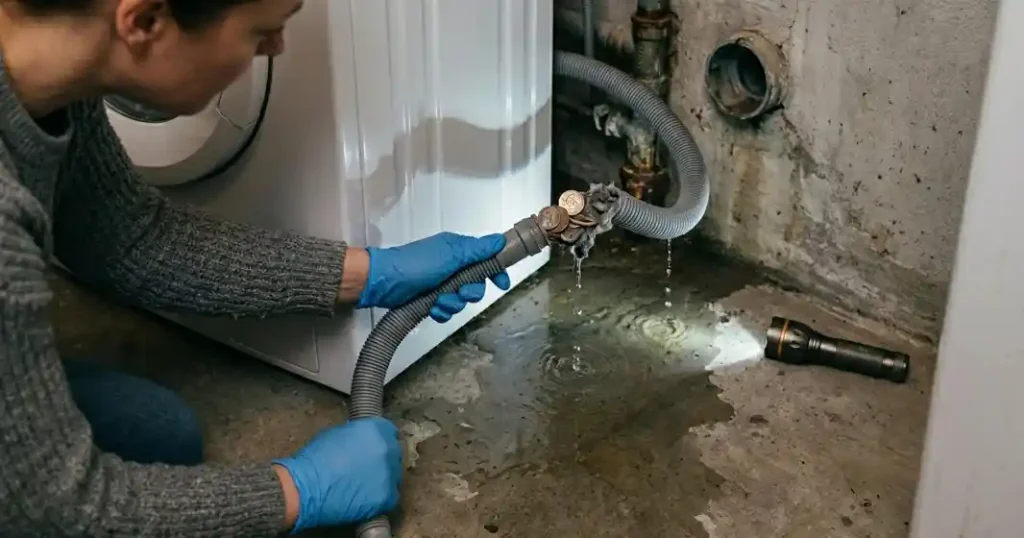
This is the single most common reason a washing machine stops draining, and it catches homeowners off guard because the hose is tucked behind the machine and out of sight.
Over time, the drain hose collects lint, soap residue, and small debris from your laundry. Coins, hair ties, and even small pieces of fabric can travel through the drum and lodge themselves inside the hose, partially or fully blocking the flow of water. A hose that has been pinched between the wall and the machine, or one that has been bent at a sharp angle, will do the same thing without any actual debris at all.
What to do: Pull your washing machine away from the wall and visually inspect the drain hose along its full length. If it is kinked, gently reshape it so the path is clear and smooth. If you suspect a clog, disconnect the hose from the back of the machine (have a bucket ready because water will come out), and run water through it in a sink to check the flow. A plumber’s snake can help dislodge a stubborn blockage inside the hose.
If the hose is cracked, brittle, or the clog cannot be cleared, replacement hoses are inexpensive. However, if you are not confident working behind the machine, a local appliance repair technician can handle this quickly.
Cause 2: Blocked Pump Filter
Many front-load washers and some top-load models have a pump filter, sometimes called a coin trap or lint filter, that sits between the drum and the drain pump. Its job is to catch foreign objects before they reach the pump and damage the impeller. It works well until nobody cleans it for six months.
When the filter gets packed with lint, coins, buttons, or small clothing items, water backs up and cannot exit the drum. You may also notice a burning or musty odor coming from the machine, or the spin cycle completing but the water staying put.
What to do: On most front-load machines, the filter is accessible through a small access panel at the bottom front of the unit. Place a shallow tray or towels underneath before you open it since water will flow out. Unscrew the cap slowly, remove the filter, and rinse it thoroughly under warm running water. Clear out any debris you find inside the housing as well. This should be done every one to three months depending on how often you run loads.
Brands like Samsung, LG, Whirlpool, and Bosch all have filters in slightly different locations, so your owner’s manual is the best reference for your specific model.
Cause 3: Faulty Drain Pump
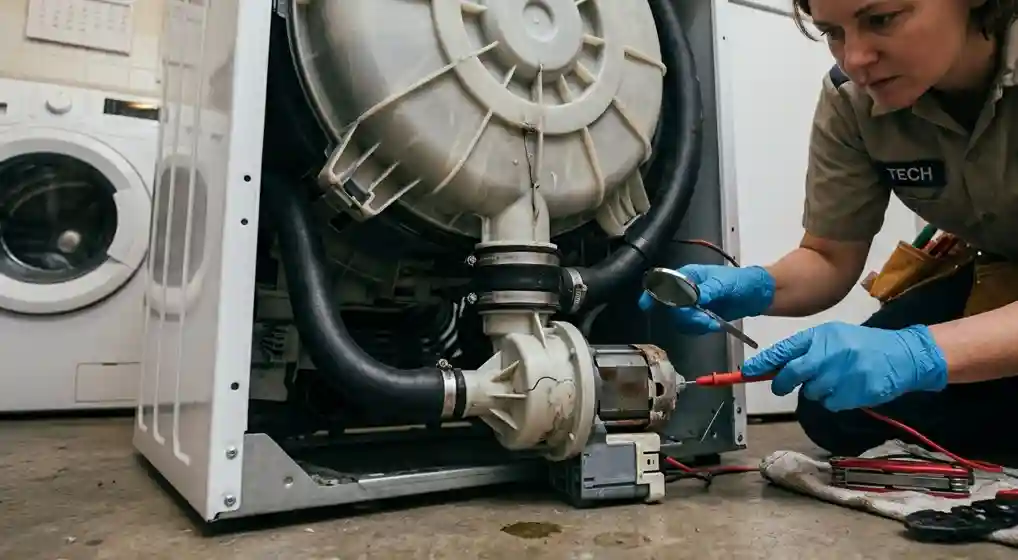
If the drain hose is clear and the filter is clean but water still sits in the drum, the drain pump itself is a strong suspect. The drain pump is a motor-driven component that creates the pressure needed to push water out of the machine. When the pump fails, either because the impeller is jammed with a foreign object, the motor has burned out, or the pump has developed an internal crack, it simply cannot do its job.
One of the clearest signs of a failing drain pump is sound. If your washer makes a loud humming, grinding, or buzzing noise during the drain cycle but no water moves, that is almost always the pump struggling or seizing. Complete silence during the drain cycle, when you would normally hear the pump running, points to a motor that has stopped working entirely.
What to do: This one is not a DIY fix for most homeowners. Replacing a drain pump requires disassembling part of the machine, correctly identifying the replacement part number for your specific model, and safely reconnecting the electrical and hose connections. Attempting this without the right knowledge can cause additional damage or create a water leak inside the cabinet.
A certified appliance repair technician can replace a drain pump in a single visit in most cases. In Lakeway and the surrounding Lake Travis area, this type of repair is one of the most common washer service calls we handle.
Cause 4: Lid Switch or Door Latch Failure
This one surprises a lot of people because it has nothing to do with a clog or a pump at all.
Top-load washing machines have a small safety switch underneath the lid. The machine uses this switch to detect whether the lid is fully closed before allowing the spin and drain cycles to run. If the lid switch breaks or becomes misaligned, the machine thinks the lid is open and will refuse to drain or spin, even though everything else is functioning perfectly.
Front-load washers work on the same principle but use a door latch assembly and a door lock mechanism instead. If the door latch does not engage properly or the electronic lock fails to signal the control board, the machine will not complete the cycle.
How to check: On a top-loader, open the lid and look for a small plastic tab or pin on the lid that presses down on the switch when the lid closes. If that tab is broken or missing, the switch never gets activated. You can also press the switch manually with a pen to see if you hear a click. No click usually means a failed switch.
What to do: Lid switches are relatively affordable parts, but the repair does involve working near the machine’s electrical components. This is generally a job best left to a technician, especially since lid switch issues are sometimes misdiagnosed as drain pump failures, which would lead to an unnecessary and more expensive repair.
Cause 5: Detergent Buildup and Soap Overload
This cause gets overlooked constantly, and it is more of a problem than most people expect.
Using too much laundry detergent, or using regular detergent in a high-efficiency washer, creates an excess of suds inside the drum. When the machine tries to drain, the foam and thick soapy water overwhelm the pump. The pump is designed to handle water, not a thick lather. The result is poor drainage, water left in the drum, and sometimes an error code on the control panel.
This is particularly common with high-efficiency front-load washers from brands like Samsung, LG, and Electrolux. These machines use significantly less water per cycle, which means even a modest overdose of detergent creates a suds problem.
What to do: If you suspect detergent buildup is the issue, run a rinse-only cycle or a dedicated drum-cleaning cycle without any detergent. Most modern washers have a drum clean setting for exactly this reason. Going forward, use only HE-rated detergent in HE machines, and use the amount the detergent manufacturer actually recommends, which is usually far less than people pour.
For machines that have been running with excess soap for months or years, residue can build up in the hose and pump housing as well. A technician can flush and clean the drainage system to get things back to normal.
Cause 6: Problem with the Control Board or Cycle Settings
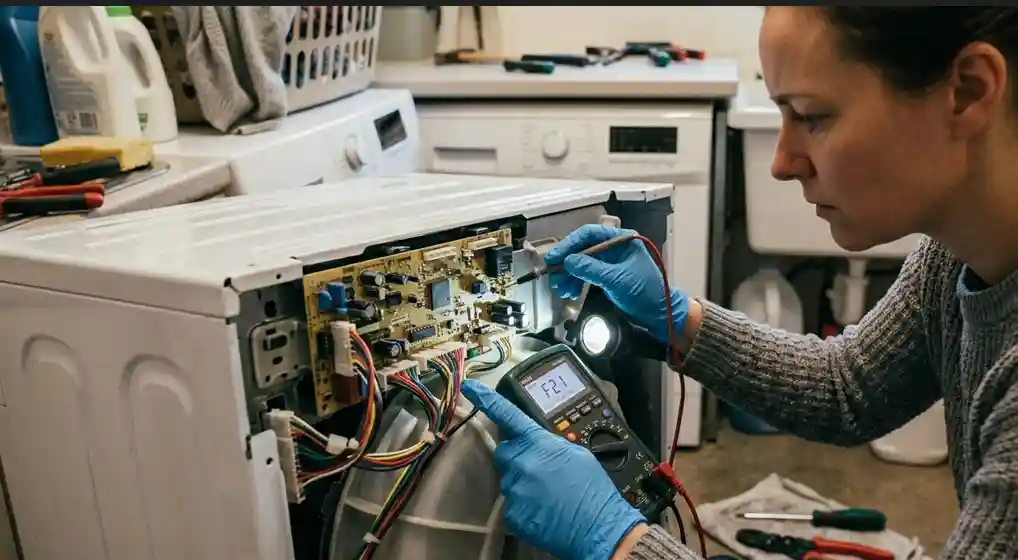
Sometimes the washing machine is physically capable of draining but the signal to start draining never gets sent. This happens when there is a problem with the electronic control board, a failed pressure switch, or, more commonly, a simple issue with the selected wash cycle.
Certain wash cycles, particularly delicate, hand wash, and wool settings, intentionally use lower spin speeds and may leave more water in the drum by design. If you switched to a gentler setting without realizing it, the machine might be performing exactly as intended, just not in the way you expected.
On older machines, or on any machine that has experienced a power surge, the control board can develop faults that affect the drain cycle specifically. The machine may run through the wash cycle normally but simply never send the signal to activate the drain pump.
What to do: First, confirm you are using the correct cycle setting. If you were running a delicate cycle, try switching to a normal or heavy-duty cycle and see if the machine drains properly. It sounds simple, but this is a surprisingly common fix.
If you suspect a control board issue, look for error codes on the display. Samsung washers, LG washers, and Whirlpool machines all have specific error codes for drain failures, such as 5E, OE, and F21 respectively. These codes tell a technician exactly where to start looking. Control board repairs and replacements are best handled by a professional since incorrect handling can damage other components.
Should You Try to Fix It Yourself or Call a Technician?
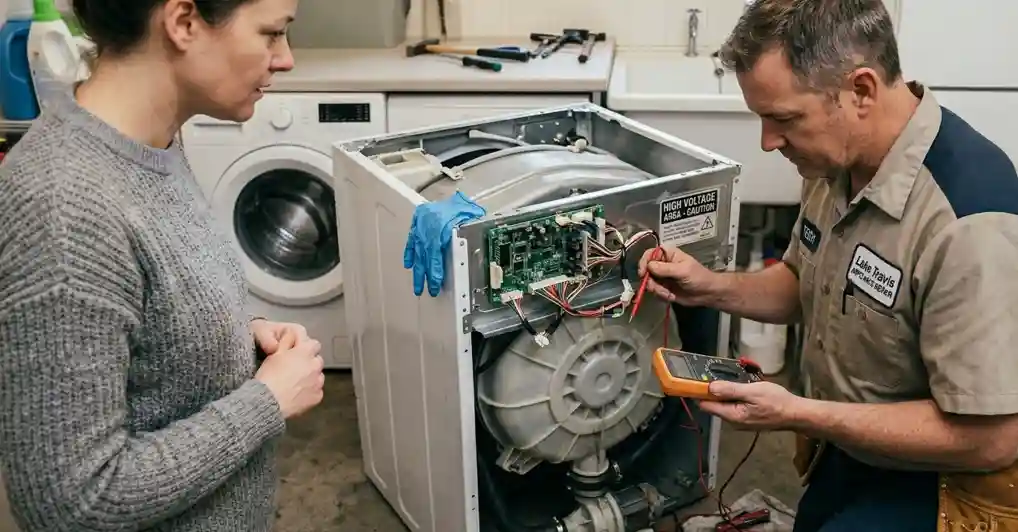
Here is an honest breakdown. Some of these issues genuinely are DIY friendly. Cleaning a pump filter, straightening a kinked hose, adjusting detergent usage, and checking cycle settings are all things a careful homeowner can handle without any special tools or training.
But if the problem is a failed drain pump, a faulty lid switch, a damaged control board, or anything that requires opening the cabinet of the machine, the risk of doing more harm than good increases significantly. Washing machines involve water and electricity in close proximity, and mistakes can lead to leaks inside the machine, electrical shorts, or voiding any remaining warranty on the appliance.
If you have gone through the checklist above and your washer is still not draining, that is the right time to stop guessing and bring in a professional.When DIY troubleshooting no longer solves the issue, professional support may be the better option. Reliable home appliance repair services focused on quality workmanship, quick response times, and long-lasting solutions can help prevent more expensive appliance failures later.
When Washer Drainage Problems Strike in Lakeway TX
Homeowners in Lakeway, Bee Cave, Steiner Ranch, Hudson Bend, and Spicewood deal with all six of these issues regularly. The hard water in the Central Texas area adds an extra layer of complexity because mineral deposits can build up inside pump housings and hoses faster than in softer water regions, accelerating blockages and reducing the lifespan of the drain pump.
If you are searching for appliance repair Lakeway, a qualified local technician can diagnose a drainage problem accurately on the first visit and carry the most common replacement parts to resolve it the same day. That matters when you have a full load of wet laundry stuck in a machine with nowhere to go.
Quick Reference: Washing Machine Not Draining Summary
Blocked drain hose: Check for kinks and debris. Clear or replace the hose.
Clogged pump filter: Clean every one to three months. Access through the front panel on most front-loaders.
Failed drain pump: Humming or grinding during drain cycle. Requires professional replacement.
Faulty lid switch or door latch: Machine will not spin or drain even though everything else works. Check the plastic tab on top-loaders and listen for a click.
Excess detergent and suds: Run a rinse cycle and switch to HE detergent in the correct amount.
Control board or cycle setting issue: Check error codes and confirm you are using the right cycle. Control board repairs need a technician.
Frequently Asked Questions
Why is my washing machine draining slowly instead of completely?
Slow drainage is usually a partial blockage rather than a complete one. The pump filter may be partially clogged, or the drain hose may be partially kinked. It can also be caused by a drain standpipe that is installed too low, which creates a siphon effect and causes some water to be pulled back into the drum. Start by cleaning the filter and checking the hose installation height.
Can a washing machine not draining damage the machine?
Yes, over time. If water sits in the drum repeatedly, it promotes mold and mildew growth inside the drum and door seal. More importantly, a failing drain pump that is left unaddressed will eventually burn out completely, which turns a moderately priced repair into a more expensive one.
How much does it cost to repair a washing machine that is not draining in Lakeway TX?
For a straightforward drain hose clearing or pump filter cleaning, the cost is on the lower end of the repair spectrum. Drain pump replacement typically runs between $200 and $400 depending on the brand and model. Control board repairs can run higher. A local technician will provide an upfront estimate before any work begins.
Is it worth repairing a washer that is not draining, or should I replace it?
If the machine is less than eight years old and the issue is a pump or hose, repair almost always makes financial sense. If the machine is over ten years old, is a lower-end model, and needs a control board or multiple parts, replacement may be the smarter investment. A good technician will give you an honest opinion on both options.
If your washer is not draining and you are in the Lakeway area, do not let wet laundry sit while you wait. Getting a technician out quickly prevents mold buildup in the drum and protects the pump from further damage. Same-day service is available throughout Lakeway, Bee Cave, Steiner Ranch, and surrounding communities.